Home Office Design Guide for Better Focus, Comfort, and Productivity
Introduction
A home office is a dedicated space in your home where you perform work or study tasks with focus and consistency. Its design directly affects how well you concentrate, how quickly you complete tasks, and how tired you feel after long working hours. Many people assume productivity depends only on discipline, but in reality, the environment plays a major role in shaping attention and performance.
A properly designed home office helps the mind separate work from rest. When your surroundings are structured and comfortable, your brain naturally understands when it is time to focus. This reduces distraction and improves efficiency without forcing extra effort.
Desk Setup and Work Surface
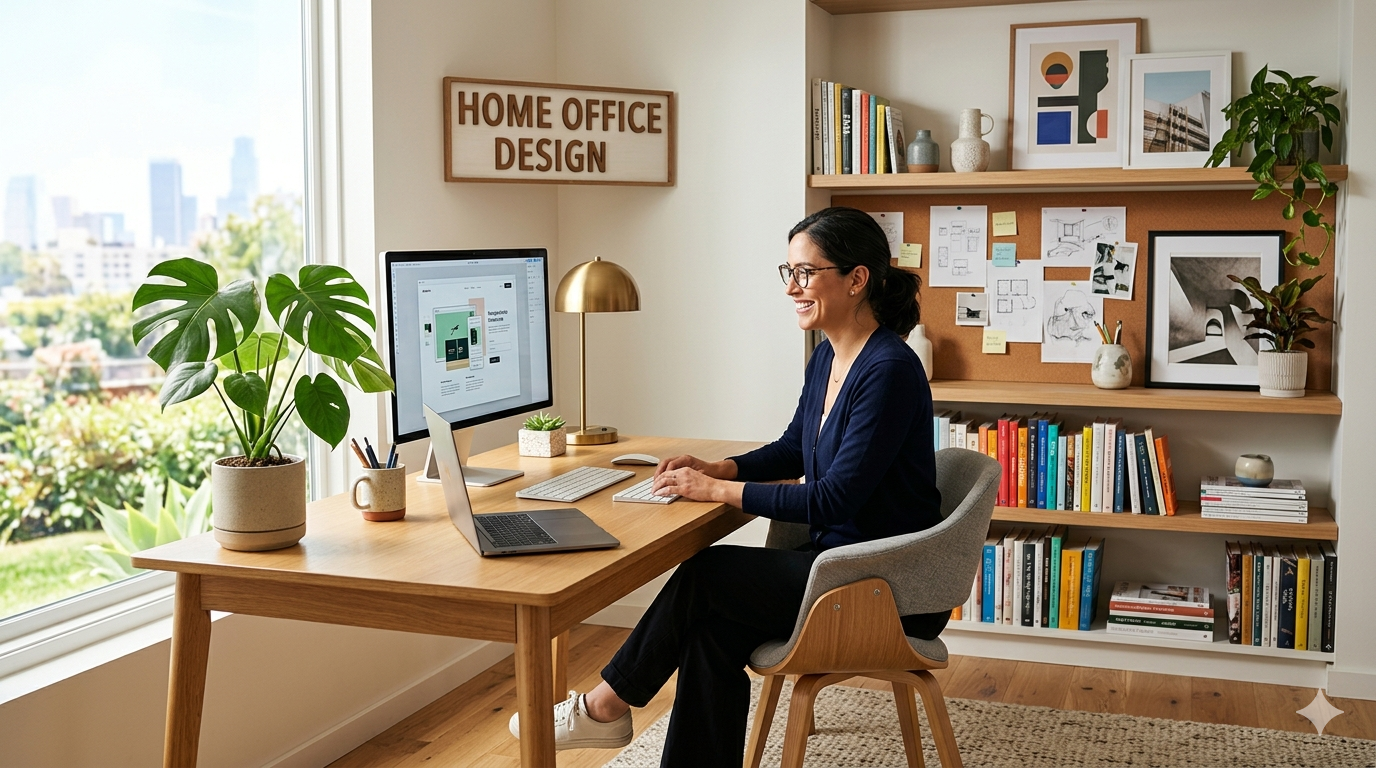
The desk is the main working area of a home office. It should provide enough space for essential items such as a laptop, notebook, and writing tools without feeling crowded.
A stable and clean surface improves task clarity. When everything has a fixed place, the mind spends less time searching for items and more time focusing on the work itself.
In real situations, people who shift from working on beds or sofas to a proper desk often notice immediate improvement in concentration. This happens because the brain starts associating the desk with structured work activity.
Chair and Physical Comfort
The chair plays an important role in maintaining physical comfort during long working hours. A well-designed chair supports the back, keeps posture straight, and reduces strain on the body.
In many remote work situations, people use regular household chairs that are not designed for extended sitting. Over time, this leads to discomfort in the back and neck, which directly reduces productivity.
A supportive chair allows the body to stay relaxed, which helps maintain focus for longer periods without unnecessary fatigue.
Lighting Conditions
Lighting affects alertness and mental energy. Natural light from a window is the most effective option because it keeps the environment bright and balanced throughout the day.
When natural light is not available, a white desk lamp is a practical alternative. Dim lighting often causes drowsiness, while overly harsh lighting can create eye strain.
In workplace studies, employees working near natural light sources consistently report better focus and lower levels of fatigue compared to those in poorly lit areas.
Noise Management
Noise is one of the most common causes of distraction in a home environment. A quiet workspace allows the mind to process information without interruption.
This can be managed by choosing a less active area of the home, closing doors during work, or using headphones when needed. Some people also use steady background sound such as soft ambient noise to improve concentration.
In practice, writers and software developers often prefer controlled sound environments because consistent noise levels reduce sudden interruptions in thought.
Organization of Workspace
An organized workspace improves clarity of thinking. When a desk is cluttered, the mind is forced to process unnecessary visual information, which reduces focus.
Keeping only essential items on the desk helps maintain a clear working environment. Pens, notebooks, and daily-use items should have fixed positions so they can be accessed quickly.
Students who maintain organized study areas often complete tasks faster because they spend less time searching for materials and more time working.
Personal Elements in the Workspace
A home office should feel comfortable and familiar. Adding simple personal elements such as a plant or a photo can make the space more balanced and less rigid.
Plants are commonly used in indoor environments because they create a calmer atmosphere and improve the visual quality of the space. Even small additions can make long working hours feel less stressful.
Layout and Space Arrangement
The arrangement of furniture and tools should follow a simple and practical layout. The desk, chair, and essential items should be placed in a way that reduces unnecessary movement.
A clear layout supports smoother workflow. When everything is within reach, the working process becomes faster and more structured.
Many productive work environments follow this principle by keeping essential tools aligned with the main working position.
Conclusion
A home office is not only about furniture placement but about creating an environment that supports focused and consistent work. When the desk is organized, the chair is comfortable, the lighting is balanced, and distractions are controlled, the mind naturally performs better.
Improving a workspace does not require major investment. Small changes such as better lighting, a stable chair, or reduced clutter can significantly improve daily productivity. Over time, a well-designed home office becomes a space where work feels more structured and manageable.